UPSC Current Affairs Today 17 September 2026: Article 371K, E20 Ethanol, Kishau Dam Explained

Today's current affairs cover polity, economy, environment, and international relations. These topics matter because they connect directly to GS Papers 1, 2, and 3, and several of them (Article 371K, E20 ethanol, UPI MDR) can also show up as Mains questions this year.
Polity & Governance
Article 371K Ladakh UPSC: Meaning, Background and Mains Notes
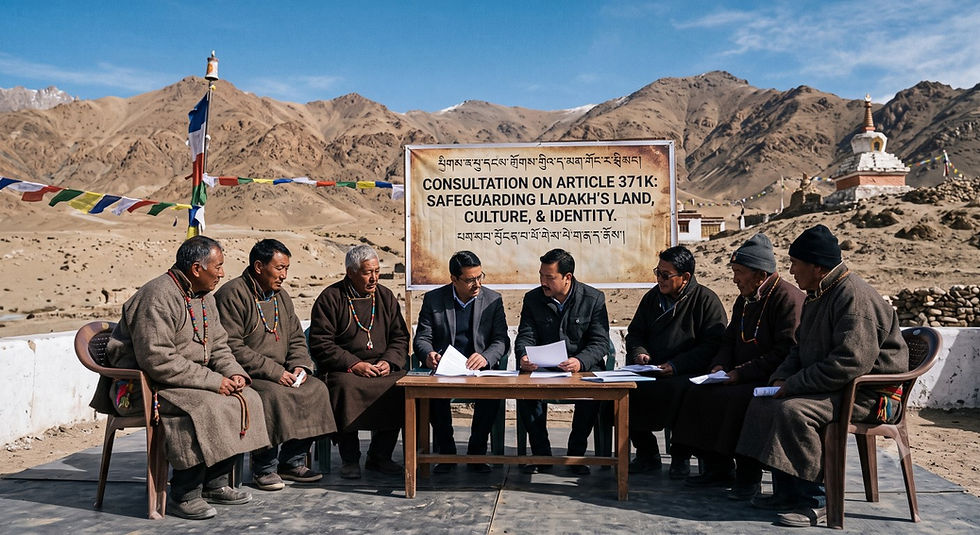
Article 371K is a proposed new provision in the Constitution that would give Ladakh special safeguards for its land, culture, environment, and local governance. The Union Ministry of Home Affairs has reached an in-principle understanding with the Apex Body, Leh (ABL) and the Kargil Democratic Alliance (KDA) to move this proposal forward.
Ladakh became a Union Territory without a legislature after the reorganisation of Jammu and Kashmir in 2019. Since then, local groups have demanded stronger constitutional protection, similar to what Articles 371-A to 371-J already give to states like Nagaland, Mizoram, and Sikkim. This is called asymmetric federalism — different regions of India getting different levels of autonomy based on their unique needs.
Why it matters for UPSC:
GS2: Federalism, special provisions, Centre-UT relations
Possible Mains angle: "Examine how special constitutional provisions balance national integration with regional identity."
Economy & Infrastructure
Kishau Multipurpose Project UPSC Notes: 6-State MoU on Tons River Explained
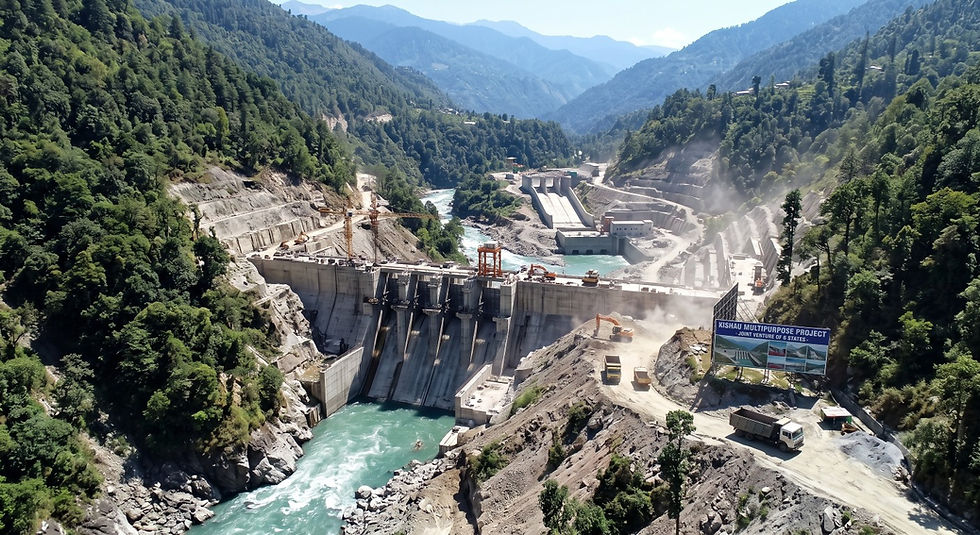
The Kishau Multipurpose Project is a proposed dam and hydropower project on the Tons River, a major tributary of the Yamuna. Six states — Himachal Pradesh, Uttarakhand, Uttar Pradesh, Haryana, Rajasthan, and Delhi — have signed a Memorandum of Understanding (MoU) in New Delhi to move the project forward after it stayed stalled for eight years due to disputes over cost-sharing.
The project, worth around Rs 15,000 crore, will now go before the Union Cabinet for approval. Since it is a Project of National Importance, the Centre bears 90% of the water-component cost, and the basin states share the rest.
Why it matters for UPSC:
GS3: Water resources, inter-state river disputes, infrastructure financing
Note the pattern: multi-state water projects often get stuck over cost-sharing, not engineering issues.
Bamboo Economy PM Vishwakarma UPSC: Key Facts for Prelims
The bamboo economy refers to the use of bamboo for livelihoods, construction, handicrafts, and rural enterprise. It connects to the PM Vishwakarma scheme, which supports traditional artisans and craftspeople, including those who work with bamboo, with skill training, tools, and low-interest loans.
Bamboo grows fast, needs little water, and can be harvested repeatedly without replanting — making it valuable for both rural income and environmental sustainability. India amended the Indian Forest Act in 2017 to remove bamboo grown outside forest areas from the definition of "tree," making it easier for farmers to cultivate and sell it freely.
Why it matters for UPSC:
GS3: Rural livelihoods, agro-forestry, skill development schemes
Static fact: PM Vishwakarma covers 18 traditional trades.
UPI MDR Framework 2026 UPSC: What It Means for GS3 Economy
The UPI MDR (Merchant Discount Rate) is the fee a merchant pays for accepting digital payments. Currently, most UPI transactions carry zero MDR, meaning merchants pay nothing to accept UPI payments. The 2026 framework discussion looks at whether small charges should return for certain high-value transactions to keep the payment ecosystem financially sustainable for banks and payment apps.
This debate balances two goals: keeping digital payments free and accessible for small merchants, while making sure banks and fintech companies can still afford to run the infrastructure.
Why it matters for UPSC:
GS3: Digital economy, financial inclusion, fintech regulation
UPI is regulated by the National Payments Corporation of India (NPCI) under RBI's oversight.
Environment & Biodiversity
E20 Ethanol Mandate UPSC: Food vs Fuel Debate Explained Simply

E20 is petrol blended with 20% ethanol. India has been pushing this blending target to cut oil imports and reduce vehicle emissions. However, the mandate has raised concerns about mileage loss in older vehicles, higher fuel costs for consumers, and pressure on food crops like sugarcane and maize that are used to make ethanol.
Experts suggest shifting more ethanol production toward 2G (second-generation) biofuels, made from crop residue and agricultural waste instead of food grains. This reduces the food-versus-fuel conflict while still cutting emissions.
Why it matters for UPSC:
GS3: Energy security, biofuels, agricultural economy
Key term: "food vs fuel" debate — when crops meant for eating get diverted to fuel production.
Western Ghats Caecilian New Species UPSC: Prelims Fact Sheet
Scientists have discovered a new species of caecilian in the Western Ghats. A caecilian is a limbless, worm-like amphibian that lives underground and is rarely seen because it burrows in moist soil. The Western Ghats is a global biodiversity hotspot, and new species discoveries here are common because much of its underground and forest-floor life remains understudied.
Why it matters for UPSC:
GS1/GS3: Biodiversity hotspots, amphibian conservation
Quick fact: The Western Ghats is one of only two biodiversity hotspots in India, the other being the Himalayas.
Project Cheetah Latest Update UPSC: Status and Key Numbers
Project Cheetah is India's programme to reintroduce cheetahs, which went extinct in the country in 1952, using cheetahs translocated from Namibia and South Africa to Kuno National Park, Madhya Pradesh. The project tracks cub survival rates, prey base availability, and habitat suitability as key success indicators.
The programme has faced challenges with cheetah deaths and adapting African cheetahs to Indian conditions, but it remains a major example of large carnivore reintroduction and international wildlife cooperation.
Why it matters for UPSC:
GS3: Wildlife conservation, species reintroduction
Compare with tiger reintroduction efforts for a stronger Mains answer.
Cardamom Tiger Landscape Cambodia UPSC: Why It's in the News
The Cardamom landscape in Cambodia has been identified as an important area for tiger restoration after breeding tiger populations disappeared there. Its intact forests still support threatened species like Asian elephants, clouded leopards, Sunda pangolins, sun bears, dholes, and Siamese crocodiles.
Poaching and wire snares remain the biggest threats to wildlife recovery in the region. Conservation efforts now focus on stronger ranger patrols, camera traps, aerial monitoring, and SMART-based surveillance (a globally used wildlife monitoring tool).
Why it matters for UPSC:
GS1: World geography, international conservation efforts
Useful for comparative questions on tiger conservation models across countries.
International Relations
Pakistan China Boundary Mechanism UPSC: GS2 IR Notes
The Pakistan-China boundary mechanism refers to the joint arrangements both countries use to manage their shared border, particularly in the Gilgit-Baltistan and Karakoram regions. This is significant for India because parts of this boundary run through territory India considers part of Jammu and Kashmir, making any Pakistan-China boundary agreement a matter of direct concern for Indian sovereignty.
Why it matters for UPSC:
GS2: India's neighbourhood relations, territorial disputes
Connect this with the China-Pakistan Economic Corridor (CPEC) for a fuller answer.
India Pakistan Military CBMs 2026 UPSC: Meaning and Significance
CBMs (Confidence Building Measures) are steps two countries take to reduce the chance of accidental conflict and build mutual trust. Between India and Pakistan, these typically include hotline communications between military officials, advance notice of military exercises, and agreements to avoid violations along the Line of Control (LoC).
CBMs don't resolve the underlying disputes, but they lower the risk of small incidents turning into larger conflicts.
Why it matters for UPSC:
GS2: International relations, conflict de-escalation mechanisms
Useful example when answering questions on India's neighbourhood-first policy.
Global Gender Gap Index 2026 UPSC: India's Rank Explained
The Global Gender Gap Index, released by the World Economic Forum (WEF), measures the gap between men and women across four areas: economic participation, educational attainment, health and survival, and political empowerment. A higher score means a smaller gap between genders.
India's performance typically varies across these four pillars; it tends to score well on political empowerment but lower on economic participation, which pulls down the overall rank. For exact 2026 figures, cross-check the latest WEF report, since these rankings update yearly and specific numbers matter for Prelims.
Why it matters for UPSC:
GS1/GS2: Social justice, gender studies, international indices
Learn the four pillars by heart — this index gets asked often in Prelims.
Science, Society & Miscellaneous
Space Weaponisation ASAT Weapons UPSC: GS3 Notes Explained
Space weaponisation means placing or using weapons in outer space, including ASAT (Anti-Satellite) weapons that can destroy satellites. This is a growing global concern because destroyed satellites create debris that stays in orbit for years, threatening other satellites, space stations, and future missions.
India tested its own ASAT capability in 2019 (Mission Shakti), becoming the fourth country to do so after the US, Russia, and China. Global regulations on space weapons remain weak, which is why experts call for stronger international treaties covering orbital debris and space security.
Why it matters for UPSC:
GS3: Space technology, international security
Link this to the Outer Space Treaty of 1967 for Mains depth.
Dadasaheb Phalke Award 2026 Winner UPSC: Static GK Fact
The Dadasaheb Phalke Award is India's highest honour in cinema, given for lifetime contribution to Indian films. It was instituted in 1969 and is named after Dhundiraj Govind Phalke, who made India's first feature film, Raja Harishchandra, in 1913.
Malayalam superstar Mohanlal received the award at the 71st National Film Awards, recognised for over four decades and 350-plus films across Indian cinema. The award includes a Swarna Kamal (Golden Lotus), a cash prize, a certificate, and a shawl.
Why it matters for UPSC:
GS1/Static GK: Culture and awards
Prelims tip: Remember the first-ever recipient: Devika Rani, honoured in 1969.
Rashtriya Poshan Maah 2026 Theme UPSC Current Affairs: Scheme Notes for Prelims
Rashtriya Poshan Maah is observed every September to mobilise communities around better nutrition. The 9th edition in 2026 was launched in Varanasi under the theme “Hamari Anganwadi, Hamari Jimmedari” (Our Anganwadi, Our Responsibility), which places Anganwadi Centres at the centre of nutrition and childcare action.
This campaign falls under Mission Poshan 2.0, run by the Ministry of Women and Child Development, which combines technology-based monitoring with community mobilisation to fight malnutrition. The focus this year is on improving diet quality, not just calorie intake, using locally available foods like millets, pulses, and seasonal vegetables.
Why it matters for UPSC:
GS2: Health and nutrition policy, welfare schemes
Prelims fact: POSHAN Abhiyaan was launched in March 2018.
Kerala Hazard Perception Test UPSC: What It Is and Why It Matters
The Hazard Perception Test is a technology-based road safety assessment introduced in Kerala to test how quickly and accurately a driver identifies potential dangers on the road, such as a pedestrian stepping out or a vehicle changing lanes suddenly. It goes beyond a basic driving test by measuring reaction time and judgment in simulated hazard scenarios.
This reform aims to reduce road accidents by ensuring new drivers can genuinely recognise risks, not just operate a vehicle mechanically.
Why it matters for UPSC:
GS2/GS3: Road safety governance, state-level policy innovation
Good example for questions on using technology to improve public safety systems.
Conclusion
Today's UPSC current affairs touch nearly every GS paper; from constitutional provisions like Article 371K to biodiversity discoveries in the Western Ghats and global indices like the Gender Gap Index. Revise the static facts (award names, scheme years, key numbers) for Prelims, and note the “why it matters” angles for Mains answer-writing. Go through this list again before bed; short, repeated revision works better than one long read.


Comments